Chinese
 English
 français
 Deutsch
 italiano
 español
 português
 日本語
 한국의




Categorieën
Hete producten
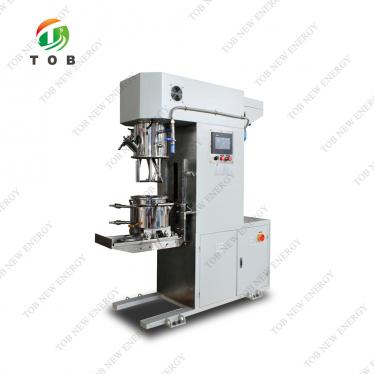
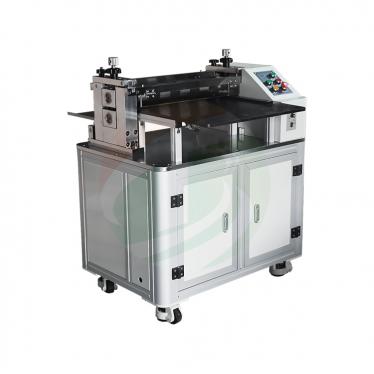
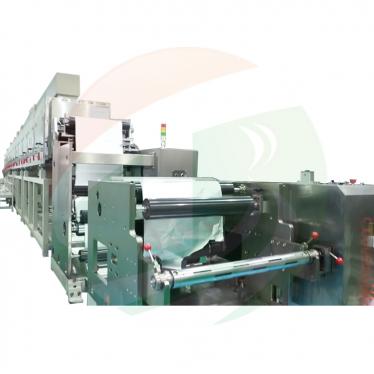
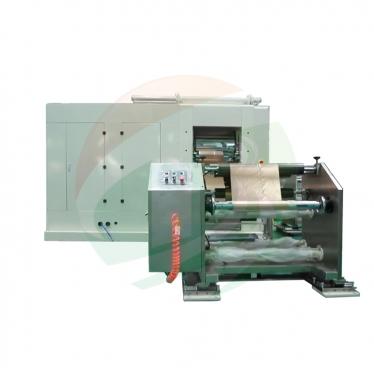
Nobel Laureate Whittingham's Lab Selects TOB Equipment
Nov 06,2026TOB NEW ENERGY is pleased to announce that the laboratory led by Professor Sir M. Stanley Whittingham at Binghamton University, State University of New York, recently selected and purchased a batch of TOB battery laboratory equipment.
Professor Whittingham is one of the three scientists awarded the 2019 Nobel Prize in Chemistry for the development of lithium-ion batteries. His foundational research helped establish the scientific principles behind rechargeable lithium batteries and continues to influence battery materials, cell design and energy-storage research worldwide.
In accordance with customer confidentiality and research requirements, TOB NEW ENERGY will not disclose the purchased equipment models, technical configuration, quantities, experimental objectives or delivery details. The announcement confirms an equipment supply relationship only and does not disclose unpublished research or imply endorsement of TOB NEW ENERGY by Professor Whittingham or Binghamton University.
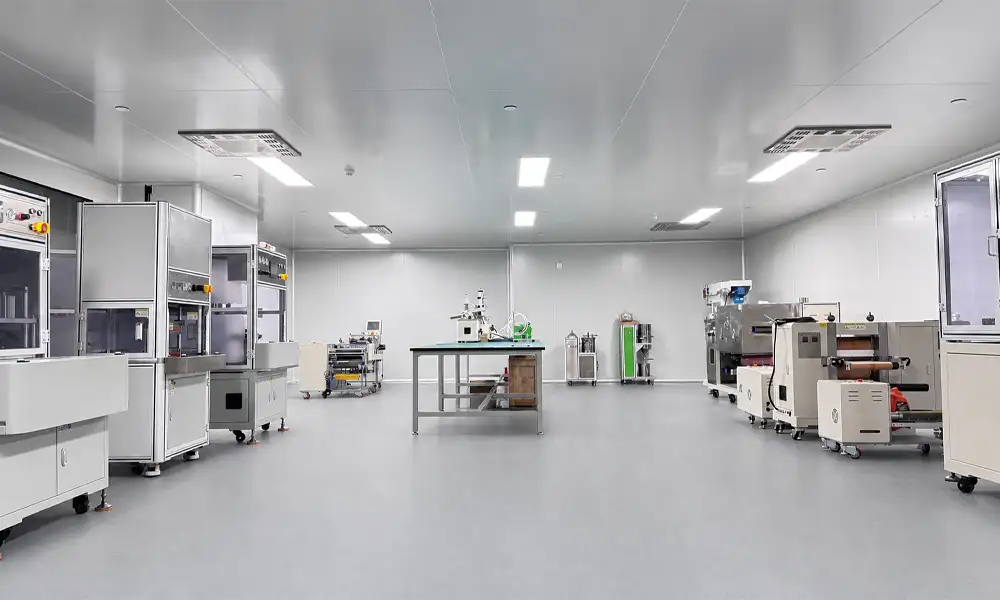
Supporting a Laboratory with a Foundational Role in Battery Science
Professor Sir M. Stanley Whittingham is a Distinguished Professor at Binghamton University. Together with John B. Goodenough and Akira Yoshino, he received the 2019 Nobel Prize in Chemistry “for the development of lithium-ion batteries.” His early work demonstrated the reversible intercalation of lithium ions in layered materials, providing an essential foundation for modern rechargeable lithium-ion technology.
Binghamton University has publicly described the Whittingham research group’s battery-development approach as a connected workflow extending from precursor materials and structural characterization to coin-cell fabrication, electrochemical cycling, pouch-cell scale-up and testing in controlled environments. This public description provides useful context for the breadth of modern academic battery research; it should not be interpreted as a list of the confidential equipment supplied by TOB NEW ENERGY in this purchase.
For battery-equipment manufacturers, supporting advanced university laboratories requires more than supplying individual machines. Laboratory systems need to accommodate changing materials, repeatable experimental procedures and reliable transition between preparation, assembly and testing. They must also offer sufficient flexibility for researchers to compare formulations without introducing uncontrolled process variation.
Confidentiality Is Part of Professional Research Support
Research equipment orders can contain sensitive information about experimental direction, cell format, material system, process route and scale-up plans. Disclosing a seemingly ordinary model number can reveal more than intended when combined with public research data. TOB NEW ENERGY therefore treats equipment selection, technical parameters, project schedules and application details as customer-confidential information unless the customer provides explicit authorization for publication.
For this project, no assumptions are being made about which batteries, chemistries or research programs will use the supplied equipment. TOB NEW ENERGY is also not attributing performance results, scientific conclusions or future publications to the equipment purchase. Such information belongs to the laboratory and its researchers.
This confidentiality discipline is important in academic and industrial projects alike. A professional supplier must be able to discuss system requirements deeply during engineering while communicating externally with restraint. Protecting the customer’s research scope is part of the service, not a limitation of it.
From Battery Research to Reproducible Cell Engineering
The value of laboratory battery equipment is measured by the quality of the experiments it enables. Researchers must distinguish material behavior from process noise. That requires stable preparation conditions, controlled pressure and temperature, consistent cell assembly, accurate dosing and traceable electrochemical testing.
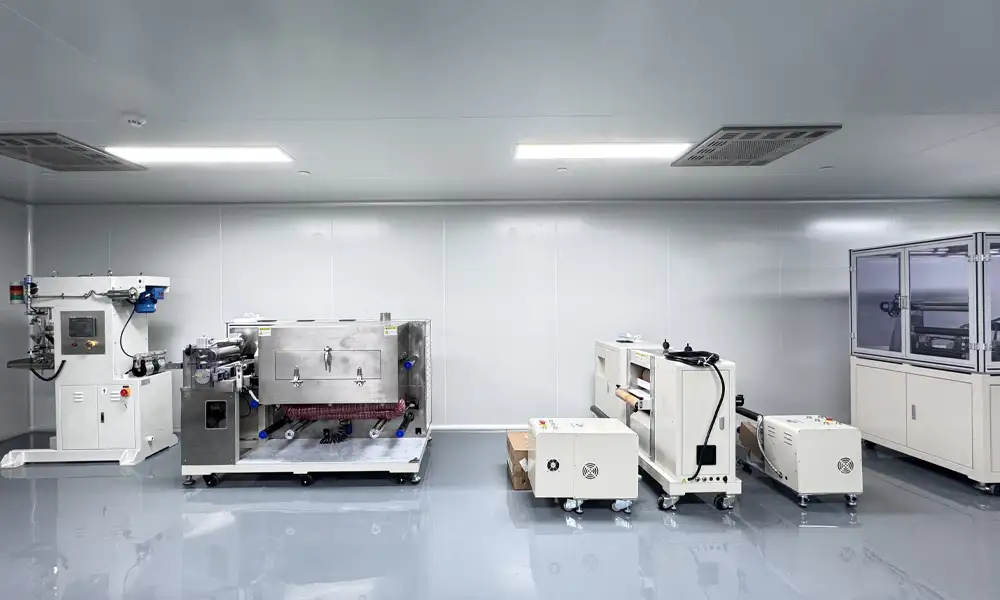
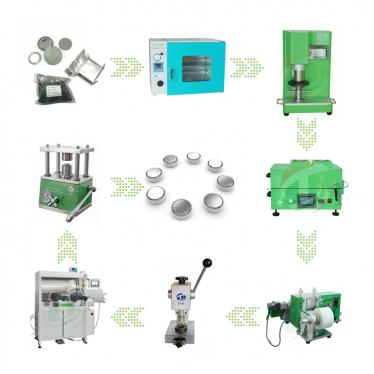
A practical laboratory workflow often begins with material preparation and characterization, proceeds through electrode or powder processing, continues into cell assembly under controlled atmospheric conditions, and ends with formation, cycling and post-test analysis. The exact sequence changes with the research question. Coin cells may be suitable for early screening, while pouch or cylindrical cells can reveal engineering effects that do not appear at very small scale.
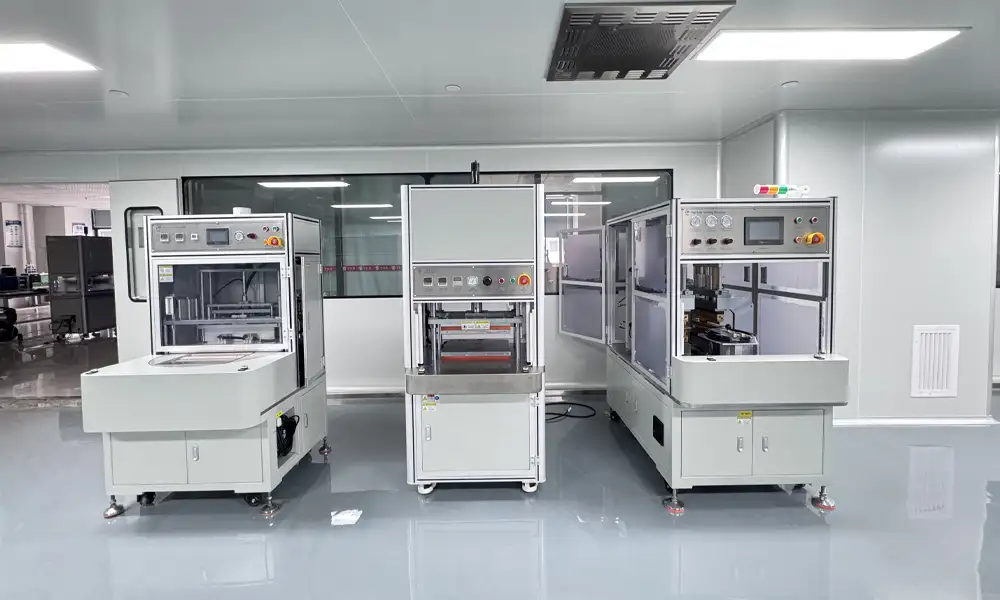
Moving from a promising material result to a larger cell introduces new variables: electrode uniformity, winding or stacking accuracy, interface pressure, electrolyte distribution, sealing integrity and thermal behavior. This is why laboratory equipment should be selected with the possible next development stage in mind. Flexible research tools and scalable process logic help teams compare data across cell formats and reduce discontinuity between academic experiments and pilot production.
TOB NEW ENERGY's Research-to-Scale Capability
TOB NEW ENERGY develops battery equipment and integrated solutions for laboratory research, pilot validation and production-line implementation. The company works with universities, research institutes, battery manufacturers and technology developers on equipment selection, process integration, installation, commissioning and technical support.
The specific equipment supplied to Professor Whittingham’s laboratory remains confidential. The following three public examples are presented only to illustrate TOB NEW ENERGY’s broader battery scale-up capabilities; they are not a disclosure of the laboratory’s purchased equipment.
32140 Tabless Cylindrical Cell Project in Europe
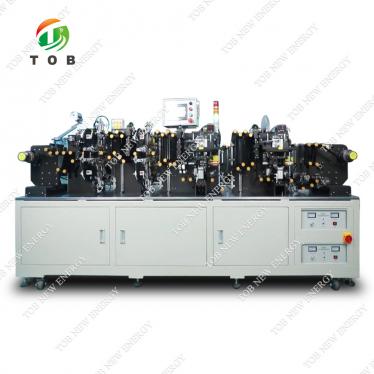
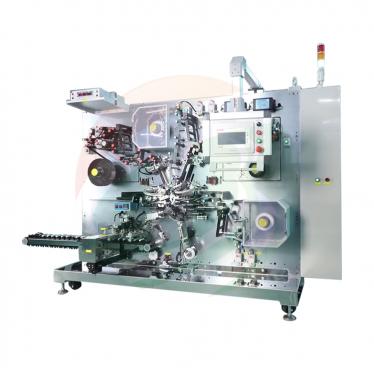
A recently delivered 32140 tabless cylindrical cell production line with stainless-steel cans in Europe demonstrates how cell design and production equipment must be engineered together. The project connects electrode preparation, cell assembly and downstream validation around a defined 32140 cylindrical architecture.
The use of stainless-steel cans and a tabless current-collection structure affects multiple stations rather than a single machine. Winding alignment, exposed collector-edge forming, current-collector welding, can insertion, sealing and inspection must be coordinated as a complete process. This integrated approach is relevant whenever a technology moves from isolated laboratory operations toward repeatable pilot or production output.
4680 and 4690 Tabless Cylindrical Battery Solutions
TOB NEW ENERGY’s 4680 and 4690 tabless cylindrical cell production line covers the linked manufacturing steps required for large cylindrical cells. Tabless designs shorten current paths and can improve current distribution, but they also increase the importance of electrode-edge accuracy, jelly-roll geometry, collector forming and laser-weld consistency.
For scale-up teams, equipment selection should follow the cell design rather than precede it. Electrode dimensions, uncoated-edge geometry, can structure, collector plate, electrolyte pathway, target current and inspection strategy all influence station configuration. Early coordination between cell developers and equipment engineers can identify manufacturability risks before pilot tooling is fixed.
UAV and Drone Battery Production Solutions
High-power aerial applications impose another set of engineering priorities. The UAV and drone battery production line illustrates a solution pathway for cells and packs that must balance energy density, power output, weight, thermal behavior and manufacturing consistency.
Drone battery development requires more than maximizing a single laboratory metric. Electrode consistency, cell matching, internal resistance, formation data, pack connection quality and safety testing all affect performance under rapid load changes. An integrated production approach allows process data to be connected with finished-battery behavior, supporting faster root-cause analysis and more disciplined scale-up.
Engineering Support Across Different Development Stages
Battery research projects rarely remain static. A laboratory may begin with material screening and later require larger electrodes, different cell formats or automated data collection. Equipment planning should therefore consider both current experiments and realistic development pathways.
TOB NEW ENERGY supports modular laboratory configurations as well as integrated pilot and production systems. Project engineering can include process discussion, equipment matching, layout planning, utility requirements, factory acceptance testing, installation, training and commissioning. Where confidentiality is required, technical communication and public disclosure are handled separately.
This approach is especially important for research teams working across chemistry and engineering boundaries. Materials scientists need controllable experimental platforms, while process engineers need repeatability, traceability and safe operating windows. Connecting those requirements helps promising electrochemical concepts progress toward cells that can be manufactured and evaluated under realistic conditions.
A scalable equipment plan does not require a laboratory to commit prematurely to a production design. Instead, it establishes which variables must remain controlled as experiments become larger: material quantities, electrode dimensions, environmental exposure, assembly pressure, testing channels and data traceability. Documenting these interfaces at the research stage makes later equipment upgrades more deliberate and reduces the risk that a promising result cannot be reproduced after the cell format changes.
A Meaningful Milestone for TOB NEW ENERGY
Supplying battery laboratory equipment to Professor Sir M. Stanley Whittingham’s group is a meaningful milestone for TOB NEW ENERGY. Professor Whittingham’s contribution to rechargeable lithium-battery science is internationally recognized, and his laboratory remains closely connected to the continuing development of energy-storage materials and cells.
TOB NEW ENERGY appreciates the opportunity to support this research environment. The company will continue to respect all confidentiality obligations and provide technical service in accordance with the agreed project scope. This announcement is intended to record an equipment-supply milestone, not to use the customer’s scientific reputation as evidence for claims that the customer has not made.
For TOB NEW ENERGY, the significance of the order also lies in the responsibility attached to serving advanced research. Equipment must arrive with clear operating documentation, stable control, appropriate safety provisions and responsive technical support. When research parameters evolve, communication between scientists and equipment engineers becomes essential for maintaining experimental continuity.
As battery science advances toward safer materials, higher energy density, faster charging and more sustainable manufacturing, progress will depend on the connection between scientific discovery and dependable experimental infrastructure. TOB NEW ENERGY remains committed to helping research teams transform ideas into reproducible processes and scalable battery technologies.
About Professor Sir M. Stanley Whittingham
Professor Sir M. Stanley Whittingham is a Distinguished Professor at Binghamton University, State University of New York. He shared the 2019 Nobel Prize in Chemistry with John B. Goodenough and Akira Yoshino for the development of lithium-ion batteries. His work on lithium intercalation and rechargeable battery materials helped establish the foundation for modern lithium-ion energy storage.
Whittingham’s early rechargeable-battery research showed that lithium ions could be reversibly accommodated within a layered host material. That concept of intercalation became fundamental to the development of practical lithium-ion cells. His Nobel Lecture, titled “The Origins of the Lithium Battery,” reviewed the scientific pathway from solid-state chemistry to rechargeable lithium systems.
At Binghamton University, his research environment has included materials preparation, structural characterization, coin-cell fabrication, electrochemical cycling, pouch-cell scale-up and controlled-environment work. These publicly documented activities demonstrate the multidisciplinary nature of contemporary battery research. They are provided here solely as biographical context and do not identify the confidential equipment involved in the recent TOB NEW ENERGY purchase.
About TOB NEW ENERGY
TOB NEW ENERGY provides battery materials, laboratory equipment, pilot-line systems and production-line solutions for multiple cell formats and battery technologies. Its service scope covers process consultation, equipment configuration, manufacturing, installation, commissioning, training and after-sales technical support for universities, research institutes and battery companies worldwide.
Projects can be configured for coin, pouch, cylindrical, prismatic and other specialized cell formats, depending on the customer’s research objective and development stage. The company’s engineering approach connects individual process stations with the relevant environmental, utility, safety and data requirements. For pilot and production systems, TOB NEW ENERGY can also support line layout, station interfaces, acceptance testing and on-site commissioning.
Because research programs often contain unpublished information, customer confidentiality is incorporated into technical communication and external reporting. Equipment details are released publicly only when authorization and project scope allow. This principle applies to the present announcement.
For battery laboratory equipment or production-line consultation, contact Amy Wang at tob.amy@tobmachine.com or +86-18120715609.
Contact TOB NEW ENERGY
Contact: Amy Wang
Email: tob.amy@tobmachine.com
Mobile / WhatsApp: +86-18120715609
Official Website: www.tobmachine.com
Address: NO.1633, Jicheng Road, Tong'an torch Industry Phase II, Tong'an District, Xiamen City, Fujian Province, China
 Abonneer u op ons