Chinese
 English
 français
 Deutsch
 italiano
 español
 português
 日本語
日本語 한국의
한국의




Categorieën
Hete producten
MIIT scherpt regels voor afgedankte batterijen aan, TOB ondersteunt naleving
Aug 06,2026Het Chinese Ministerie van Industrie en Informatietechnologie (MIIT) heeft aankondiging nr. 20 van 2026 uitgevaardigd, waarmee beleid en normen met betrekking tot het hergebruik van afgedankte accu's van elektrische voertuigen (EV's) worden ingetrokken en herzien, en de bijbehorende industriële activiteiten worden gereguleerd. De aankondiging, gepubliceerd op 30 juli 2026, markeert een belangrijke verschuiving in de manier waarop China omgaat met de levenscyclus van EV-accu's en is een duidelijk signaal dat accuproducten moeten voldoen aan toepassingsgerichte kwaliteitsnormen onder strenger toezicht van de regelgevende instanties.
VoorTOB NIEUWE ENERGIEAls leverancier van geïntegreerde batterijoplossingen voor meer dan 6.000 fabrieken, universiteiten en onderzoeksinstellingen wereldwijd, bevestigt dit beleid de koers die het bedrijf al lange tijd vertegenwoordigt: conforme, kwaliteitsgerichte batterijproductie en recycling op materiaalniveau, in plaats van ongereguleerd hergebruik van afgedankte cellen.
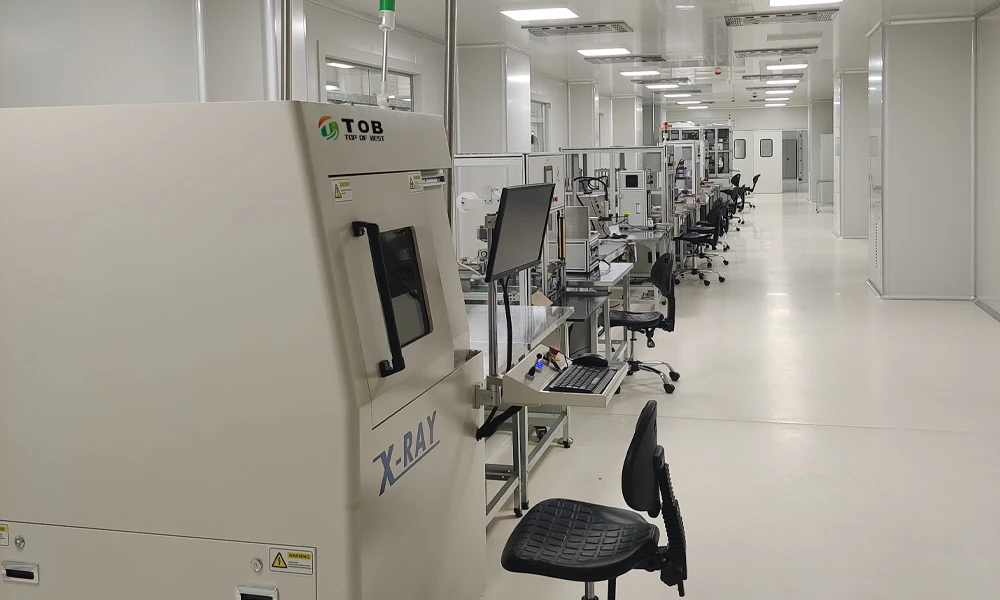
Wat de aankondiging verandert
Einde van het beheer van cascade-gebruiksbedrijven. De bepalingen inzake cascade-gebruik van de "Industriestandaardvoorwaarden voor het alomvattend gebruik van afgedankte accu's van elektrische voertuigen (editie 2024)" worden ingetrokken. MIIT zal geen aankondigingslijst meer beheren voor cascade-gebruiksbedrijven en eerder aangekondigde cascade-gebruiksbedrijven worden van de lijst verwijderd. De aangekondigde lijst met bedrijven voor regeneratie (materiaalrecycling) blijft wel van kracht.
Strengere productconformiteit. Batterijproducten die zijn vervaardigd uit afgedankte accu's moeten voldoen aan de kwaliteitsnormen van hun toepassingsgebied. De aankondiging verbiedt uitdrukkelijk elke organisatie of persoon om afgedankte accu's, geheel of na splitsing, herorganisatie of herassemblage, te gebruiken als accupakketten, modules of cellen in elektrische fietsen of andere toepassingen die verboden zijn door wetten, administratieve voorschriften en verplichte normen.
Opruiming van de standaardisatie. Relevante standaardisatieorganisaties worden opgedragen de nationale en branchestandaarden met betrekking tot cascadegebruik te herzien en de intrekking of herziening ervan te versnellen, waarbij het standaardenkader wordt afgestemd op de nieuwe beheereisen.
Strengere handhaving. De bevoegde autoriteiten worden opgedragen het toezicht en de handhaving te versterken, onderzoek te doen naar en sancties op te leggen aan de productie van niet-conforme batterijproducten gemaakt van afgedankte accu's. Maatschappelijke organisaties worden tevens verplicht om promotie-, tentoonstellings-, advies- en trainingsactiviteiten met betrekking tot cascadegebruik te staken.
Wat de beleidswijziging betekent voor batterijfabrikanten
De aankondiging betekent niet het einde van het concept van hergebruik van batterijen. Het herdefinieert wel hoe afgedankte batterijen op een verantwoorde manier moeten worden verwerkt.
Recycling op materiaalniveau wordt de conforme afvalverwerkingsmethode. Nu de regelgeving voor hergebruikbedrijven is afgeschaft en de lijst met regeneratiebedrijven behouden blijft, stuurt het beleid de industrie richting het terugwinnen van batterijmaterialen, waaronder kathode- en anode-actieve materialen, folies en andere recyclebare componenten, in plaats van het hergebruiken van oude cellen in nieuwe consumentenproducten.
Kwaliteitsnormen zijn nu van toepassing op elk batterijproduct. Elk batterijproduct dat in een toepassing wordt gebruikt, moet voldoen aan de kwaliteitseisen van die toepassing, ongeacht of de materialen nieuw of gerecycled zijn. Dit verhoogt de lat voor fabrikanten en versterkt de concurrentiepositie van leveranciers met volwaardige kwaliteitssystemen.
De productiecapaciteit voor nieuwe batterijen wordt waardevoller. Naarmate ongereguleerde kanalen voor hergebruik verdwijnen, neemt de vraag naar conforme, toepassingsgerichte nieuwe batterijen toe, evenals de apparatuur, materialen en procestechniek die nodig zijn om ze te produceren.
De rol van TOB in een conforme batterijwaardeketen
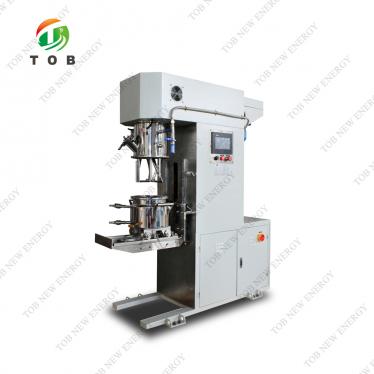
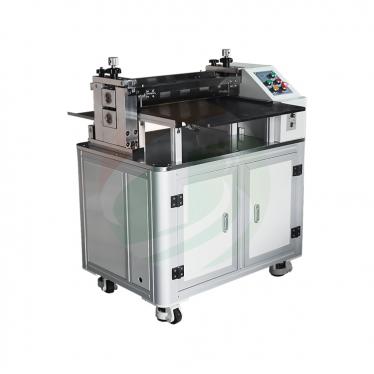
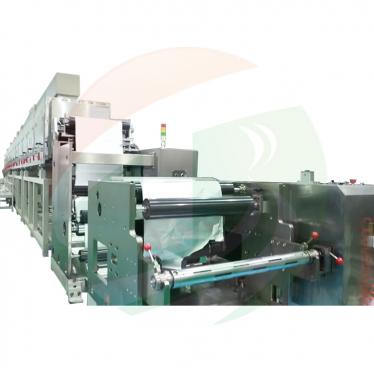
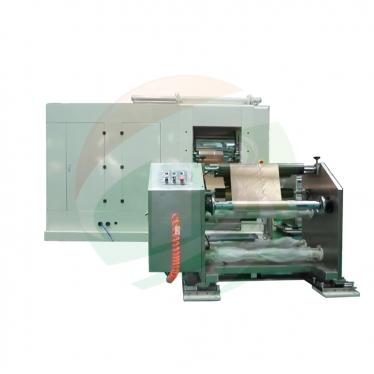
Het geïntegreerde model van TOB NEW ENERGY, inclusiefbatterij-equivalentpment,batterijmaterialen, Enkant-en-klare productielijnenDit positioneert het bedrijf om fabrikanten te ondersteunen bij het doorlopen van deze regelgevingsovergang.
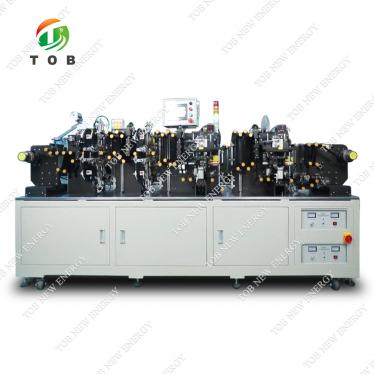
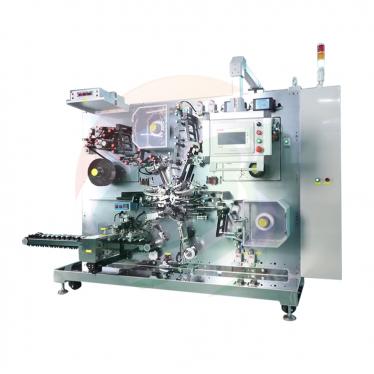
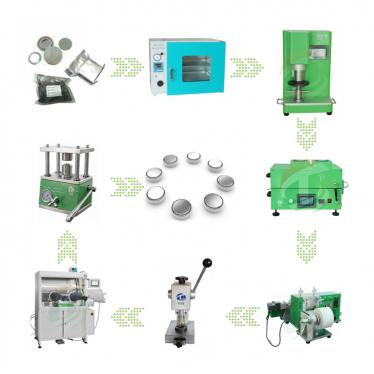
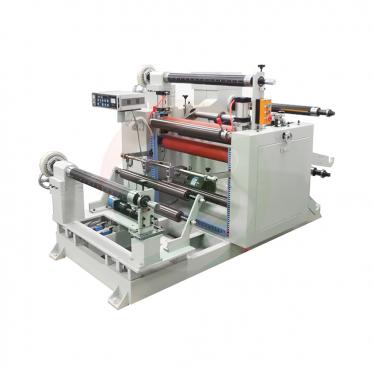
Conforme productie van nieuwe batterijen. TOB ontwerpt en levert productielijnen voor de fabricage van nieuwe cellen uit gekwalificeerde materialen, inclusief elektrodepreparatie, celassemblage, vorming en testen. Voor fabrikanten die actief zijn in toepassingen die nu aan strengere eisen onderworpen zijn, helpt de engineeringgerichte aanpak van TOB bij het configureren van apparatuur volgens toepassingsspecifieke kwaliteitseisen in plaats van generieke specificaties.
Toepassingsgerichte kwaliteitssystemen. De productie- en kwaliteitsinfrastructuur van TOB, inclusief IATF 16949.Kwaliteitsmanagement op automobielniveau, ISO 9001/14001/45001-managementsystemen, CE- en UL-productcertificeringen en een beoordeling van de leverancierscapaciteit door TÜV Rheinland op locatie, tonen de controlediscipline aan die het nieuwe beleid vereist: stabiele processen, traceerbare kwaliteit en geverifieerde productconformiteit.
Ondersteuning bij materiaalterugwinning en -regeneratie. Nu regeneratie de basis vormt voor een alomvattende benutting van afgedankte accu's, ondersteunen de expertise van TOB op het gebied van accumaterialen en procestechniek klanten die werken met gerecyclede grondstoffen. Dit omvat alles van materiaalkarakterisering en de productie van op maat gemaakte materialen in kleine batches tot de validatie van gerecyclede grondstoffen op pilotlijnen.
Diepgaande R&D op het gebied van chemie. TOB'sR&D-centrum van meer dan 3.000 vierkante meter,60+nationale patenten, Engezamenlijk laboratorium met Central South UniversityZorg ervoor dat het bedrijf op de hoogte blijft van de nieuwste LFP-, NMC-, LCO-, LMFP-, natriumion- en solid-state-technologieën. Deze kennisbasis is essentieel voor fabrikanten bij het aanpassen van productlijnen aan nieuwe eisen op het gebied van compliance en prestaties.
Maatwerk en aftersalesondersteuning. Elk TOB-project begint met procesengineering: inzicht in de celchemie, het formaat, de doorvoer en de toepassingsbeperkingen voordat de apparatuur wordt geconfigureerd. Aftersalesondersteuning, inclusief installatie, inbedrijfstelling, training van operators, reserveonderdelen en procesdebugging, helpt klanten de opbrengst en kwaliteit te stabiliseren terwijl ze zich aanpassen aan veranderende regelgeving.
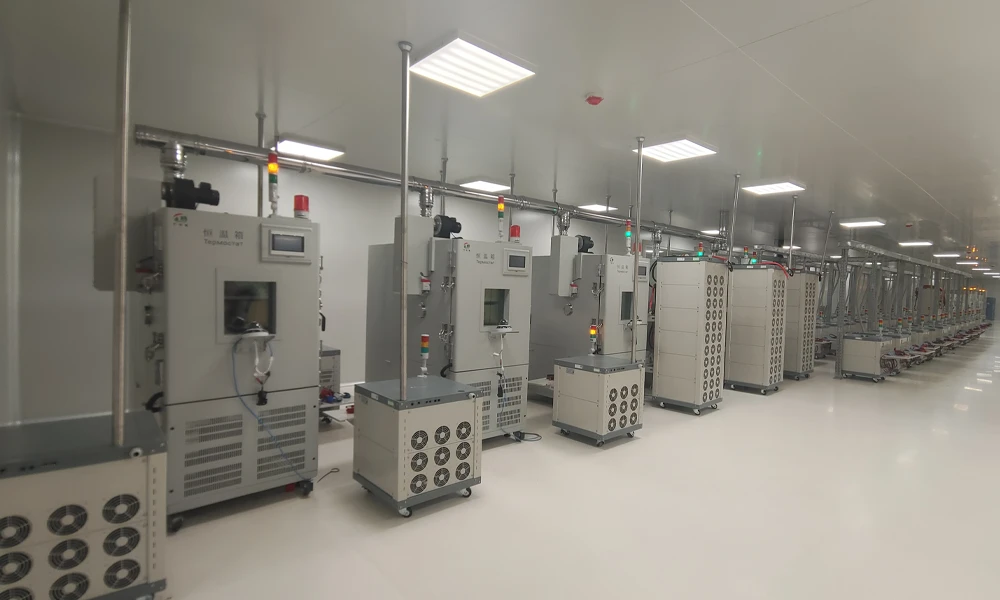
Een heldere, hoogwaardigere batterijtoekomst
De aankondiging van het MIIT weerspiegelt een volwassen wordende batterij-industrie: afgedankte batterijen zijn een grondstof die op verantwoorde wijze moet worden hergebruikt, en geen basis voor goedkope, niet-conforme producten. Voor fabrikanten is de boodschap duidelijk: produceer conforme, kwaliteitsgecontroleerde batterijproducten en behandel afgedankte batterijen als materialen die gerecycled moeten worden, niet als cellen die opnieuw verkocht moeten worden.
TOB NEW ENERGY sluit perfect aan bij die visie. Met geïntegreerde mogelijkheden op het gebied van apparatuur, materialen, procestechniek en levering van productielijnen, ondersteunt TOB klanten bij het opbouwen van conforme batterijproductiecapaciteit, van R&D op laboratoriumschaal tot productie op GWh-schaal.
Bron:MIIT-aankondiging nr. 20 (2026)Ministerie van Industrie en Informatietechnologie, 30 juli 2026.
TOB NEW ENERGY is een geïntegreerde leverancier van batterijoplossingen en levert batterijapparatuur, batterijmaterialen en complete productielijnen, van laboratoriumschaal tot GWh-schaal. Het bedrijf is opgericht in 2012, maar heeft een technische achtergrond die teruggaat tot 2002. TOB NEW ENERGY heeft wereldwijd meer dan 6.000 klanten in meer dan 30 landen. Bezoek onze website.www.tobmachine.com.
 Abonneer u op ons